
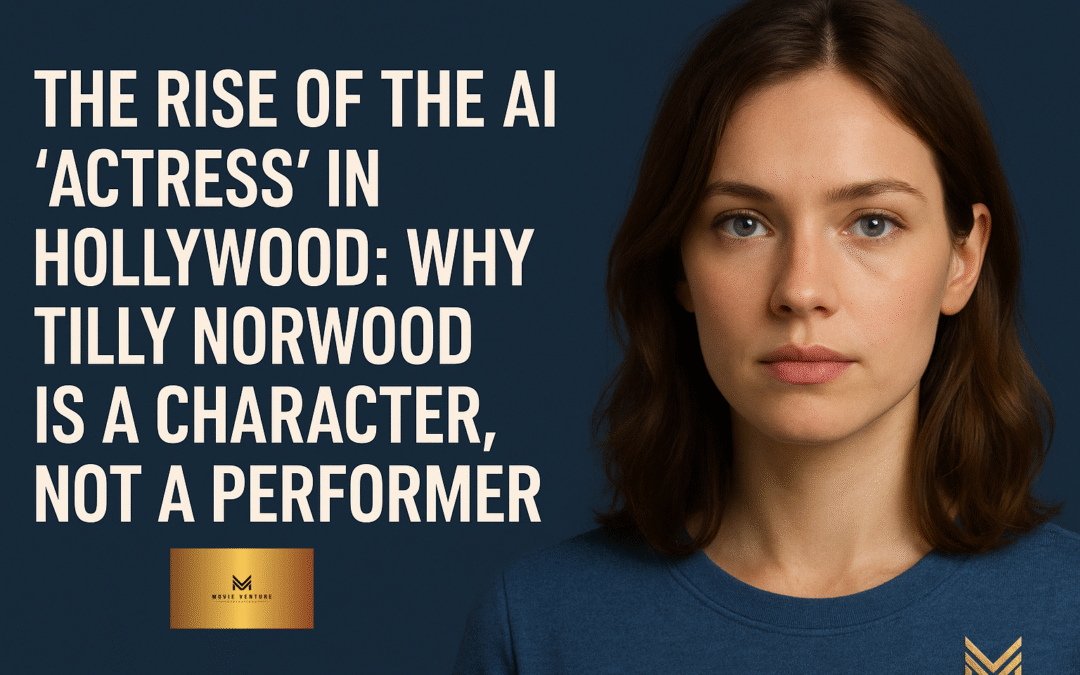
The Rise of the AI “Actress” in Hollywood: Why Tilly Norwood is a Character, Not a Performer
In recent weeks, Hollywood has been buzzing with headlines about an “AI actress” supposedly gaining traction with talent agencies and stirring audience curiosity. Her name is Tilly Norwood, a photorealistic creation built by the AI talent studio Xicoia (a project under Particle6, led by Eline Van der Velden). She has an Instagram feed, a growing fanbase, and even teasers for upcoming “acting roles.”
But here’s the truth: Tilly isn’t an actress at all. She’s a character — an algorithm-driven digital creation. And that distinction matters more than most of the headlines suggest.
Hollywood’s Experiment with Synthetic Stars
Tilly is designed to function like a hybrid between influencer, performer, and brand asset. She posts selfies, screen tests, and lifestyle updates. Her creators are even in discussions with agencies about representation, treating her as though she were a human talent.
This experiment reflects a broader trend: Hollywood and the entertainment industry are actively testing how far audiences will accept synthetic personalities in place of real performers. It’s a frontier that mixes intrigue, innovation, and controversy in equal measure.
The Backlash: Artists Push Back
The acting community has not been silent. From SAG-AFTRA’s official condemnation to actors like Emily Blunt and Whoopi Goldberg raising alarm, many are deeply concerned.
Their argument is clear: Tilly was trained on the backs of thousands of real performers — their expressions, mannerisms, and emotional cues. None of those human contributions were licensed or compensated. By presenting her as an “actress,” Hollywood risks devaluing the very art form that depends on lived human experience.
As SAG-AFTRA put it: Tilly “is not an actor, it’s a character generated by a computer program that was trained on the work of countless professional performers — without permission or compensation.”
Character vs. Performer
At MVI-Media, we think this distinction is crucial.
- A performer draws from personal experiences, emotions, and risks to deliver something uniquely human.
- A character like Tilly is programmed. She can only mimic those human emotions, never live them.
The danger comes when the industry blurs the two. Presenting Tilly as an actress confuses audiences, undermines human artistry, and potentially threatens livelihoods. Presenting her as a character, however, opens creative possibilities without erasing credit from those who inspire her existence.
Where This Leaves Storytelling
The arrival of Tilly Norwood forces the entertainment world to wrestle with big questions:
- Ethics and Ownership: Who owns synthetic performances? How should human artists be credited when their likeness or work influences AI models?
- Economic Realities: Will studios replace supporting actors and extras with cheaper digital replicas?
- Audience Connection: Will viewers accept artificial performances, or will authenticity remain central to storytelling?
We believe the future will not be about replacing actors, but about finding balance. Just as CGI, puppetry, and animation expanded the creative toolkit, AI-driven characters can play a role. But they should be marketed transparently as what they are: characters, not performers.
Final Word
Tilly Norwood is not a threat because she is “too good.” She’s a challenge because she blurs the line between innovation and exploitation. Her rise should push Hollywood to clarify what makes acting art — the humanity behind the performance.
At MVI-Media, we see her as a symbol of a turning point. If used ethically, AI characters may become a powerful new storytelling tool. But if marketed as replacements for human performers, they risk undermining the very heart of cinema.
And that’s a script nobody wants to greenlight.